There is a particular feeling that comes with the transition into autumn. After a generous Amsterdam summer filled with long, bright days, the shift can feel almost sudden. The days become shorter, temperatures begin to drop, and the light changes. Sometimes, our mood changes with it. We may feel more restless, more sensitive, or simply find that worries that felt distant during the summer begin to surface again. We struggle with getting into the routine again.
Autumn asks us to slow down.
It is a season of transition, a moment between what was and what is coming. And perhaps this is why the practice of yoga can feel especially meaningful at this time of year. The mat becomes a place to notice what is changing, rather than resisting it.
Autumn through the lens of Ayurveda
Ayurveda is the sister science of yoga, bearing thousands of years of wisdom and traditions from ancient India to the modern days. In Ayurveda, autumn is associated with Vata dosha, the combination of the air and space elements.
Vata is light, mobile, dry and changeable, qualities that can be felt in the environment around us as the weather becomes cooler, windier and less predictable. When Vata becomes excessive, we may experience restlessness, scattered thoughts, anxiety, difficulty sleeping or a feeling of being ungrounded.
This doesn’t mean that autumn is something we need to “fix”. Instead, Ayurveda invites us to respond to the qualities of the season by introducing their opposites: warmth, steadiness, nourishment, slowness and routine.
The same principle can be brought onto the yoga mat. Rather than pushing harder, moving faster or looking for the next challenge, autumn can be an invitation to practice staying. Exactly where you are.
The autumn equinox: a moment of balance
The autumn equinox marks a beautiful moment in the seasonal cycle: day and night are almost equal in length. For a brief moment, there is balance between light and darkness before the year gradually moves towards its quieter, darker half.
This makes the equinox a natural opportunity to pause and reflect. What are you carrying with you into this next season? What could you let go of? Where could you create more space for rest, grounding or simplicity?
These questions don’t necessarily need immediate answers. The practice can be to simply notice what arises. And this is where the yoga mat can become a place of transition.
5 simple practices for autumn
You don’t need a complicated sequence to support your body and mind during this season. Small, consistent practices can have a powerful effect and be of great particularly at time of changes.
- Ground through your feet
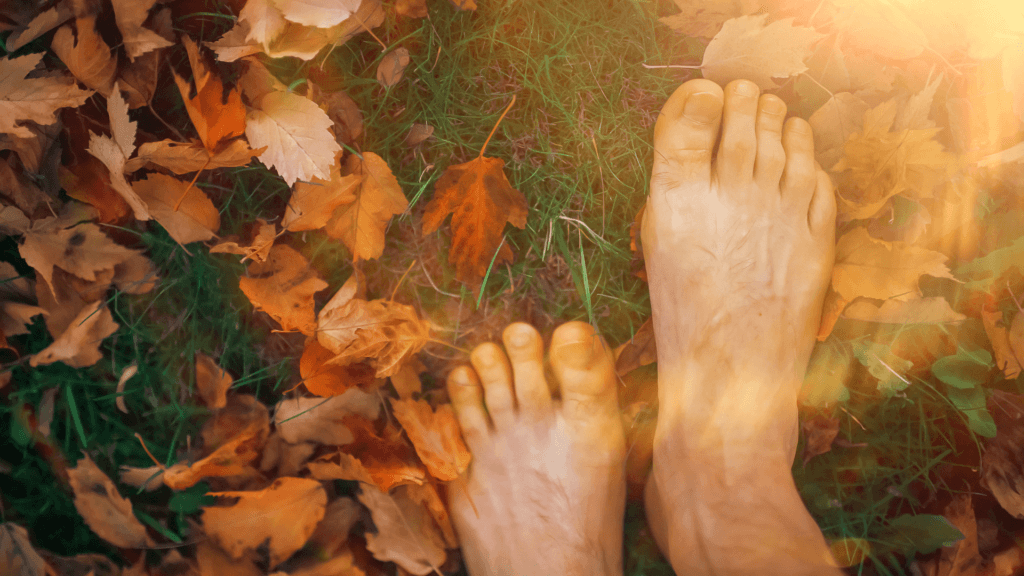
Begin in Tadasana (Mountain Pose) standing still with you bare feet apart and spend around five slow minutes simply standing. Before changing anything, bring your attention to the soles of your feet. Feel your weight. Notice the contact between your body and the ground.
From there, move the weight onto 1 leg and stand into the balancing pose Vrksasana (Tree Pose) one side at the time with a small pause in between. Then take a wide stance with parallel feet for Prasarita Padottanasana (Wide-Legged Forward Fold) and bend forward reaching the hands towards the floor. When finished with this pose, come out slowly and end in Tadasana again, feeling your feet..
Stay for 5–10 slow, comfortable breaths in each pose. At every stage, return your attention to your feet. Vata is associated with movement and lightness. Feeling your own weight, literally, can be one of the simplest ways to cultivate steadiness.
- Rest with legs up the wall
Viparita Karani (legs up the wall) is one of the simplest ways to create a little more space for rest.
Sit sideways next to a wall, then gently swing your legs up as you lower your back towards the floor. Let your sitting bones rest comfortably close to the wall.
Stay for five to ten minutes. Allow your arms to rest by your sides, palms facing upwards, and soften your gaze or close your eyes. There is very little to do here. And that is exactly the point. When the mind feels scattered, a practice that asks almost nothing from us can be deeply grounding.
- Slow down your sun salutations
Sun Salutations don’t always have to be dynamic. Try practicing two or three rounds at half your usual speed.
Pause for 3-5 long breaths in Downward-Facing Dog. Between rounds, return to Mountain Pose and stay for another three breaths.
Notice the warmth building gradually through the body rather than rushing towards it. Autumn is an opportunity to practice moving with intention rather than momentum. When you finish your final round, remain standing for a few moments before moving on.
- Balance with the breath
Nadi Shodhana, or alternate nostril breathing, can be a beautiful practice when the mind feels busy or unsettled.
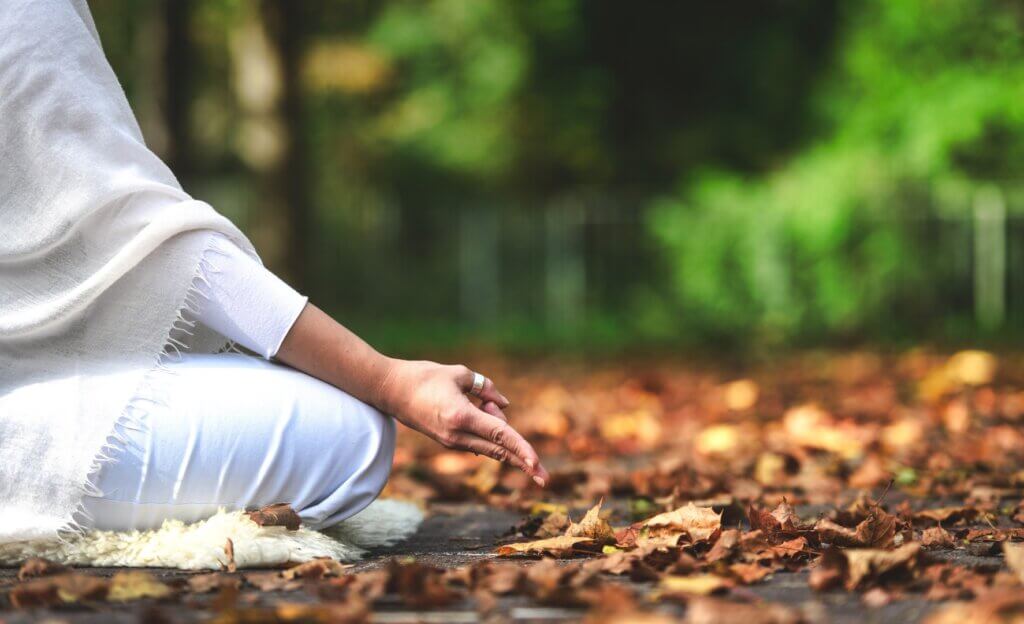
Sit comfortably and allow your spine to be upright without becoming rigid.
Using your right thumb, gently close the right nostril and inhale through the left. Close the left nostril with your ring finger, release the right nostril and exhale through the right.
Inhale through the right, switch sides, and exhale through the left. This makes 1 round of Nadi Shodhana.
Continue for five to eight rounds. Keep the breath slow and comfortable, feeling your belly moving. There is no need to force anything. If it helps, count each breath silently to keep your attention connected to the present moment.
The intention isn’t to force yourself to become calm. It is simply to create balance, bringing your attention back to the breath and to the experience of being here in the present moment.
- Take the practice beyond the mat
You will probably need to find extra support beyond the mat to transition into autumn without losing your ground.
A few simple anchors throughout the day can make a huge difference:
Keep a consistent rhythm. Try to maintain relatively regular times for waking and sleeping.
Choose warmth and nourishment. As the temperature drops, warm, cooked meals can feel more grounding than constantly reaching for cold or raw foods. Drop the salads (note to Self).
Soften your evenings. As the natural world becomes quieter and darker, allow your evenings to do the same. Reduce screen light when possible, slow down, and create moments of stillness before bed.
Pause. The art of pausing throughout the day – for just a couple of minutes – gives you the tool to reset at any moment. You simply “pause” whatever you’re doing or thinking about. Leave everything as it is, take a few steps away and a couple of long deep breaths. You will have more widthband when you come back.
Coming back to ourselves
The transition into autumn can bring a sense of uncertainty. We notice the changing weather, the shorter days and the shift in energy around us. And sometimes, we notice our own inner changes too.
Yoga doesn’t ask us to resist these transitions. It gives us a place to meet them.
To slow down. To breathe. To feel the ground beneath our feet. To notice the thoughts, emotions and sensations that are present, without immediately needing to react upon them. This is the invitation to meet the ourselves breath by breath, moment by moment, as we move through this particular time of the year.
Supporting your autumn transition at Yoga Circle
If you would like to explore practices specifically designed to support this seasonal transition, we invite you to join us at Yoga Circle. We have scheduled 2 dedicated events in October this year to give you extra tools for the Autumn.
Special Class with Sanne “Practices for the Autumn Season”: we will explore ways to cultivate grounding, warmth and steadiness through ayurvedic tips, yoga practice and breathing.
Online Community Program “Autumn Reset“: a 2 weeks program with a mild reset for a deeper opportunity to slow down, cleanse the body, reconnect and create space for the season ahead.
Stay warm, stay grounded.